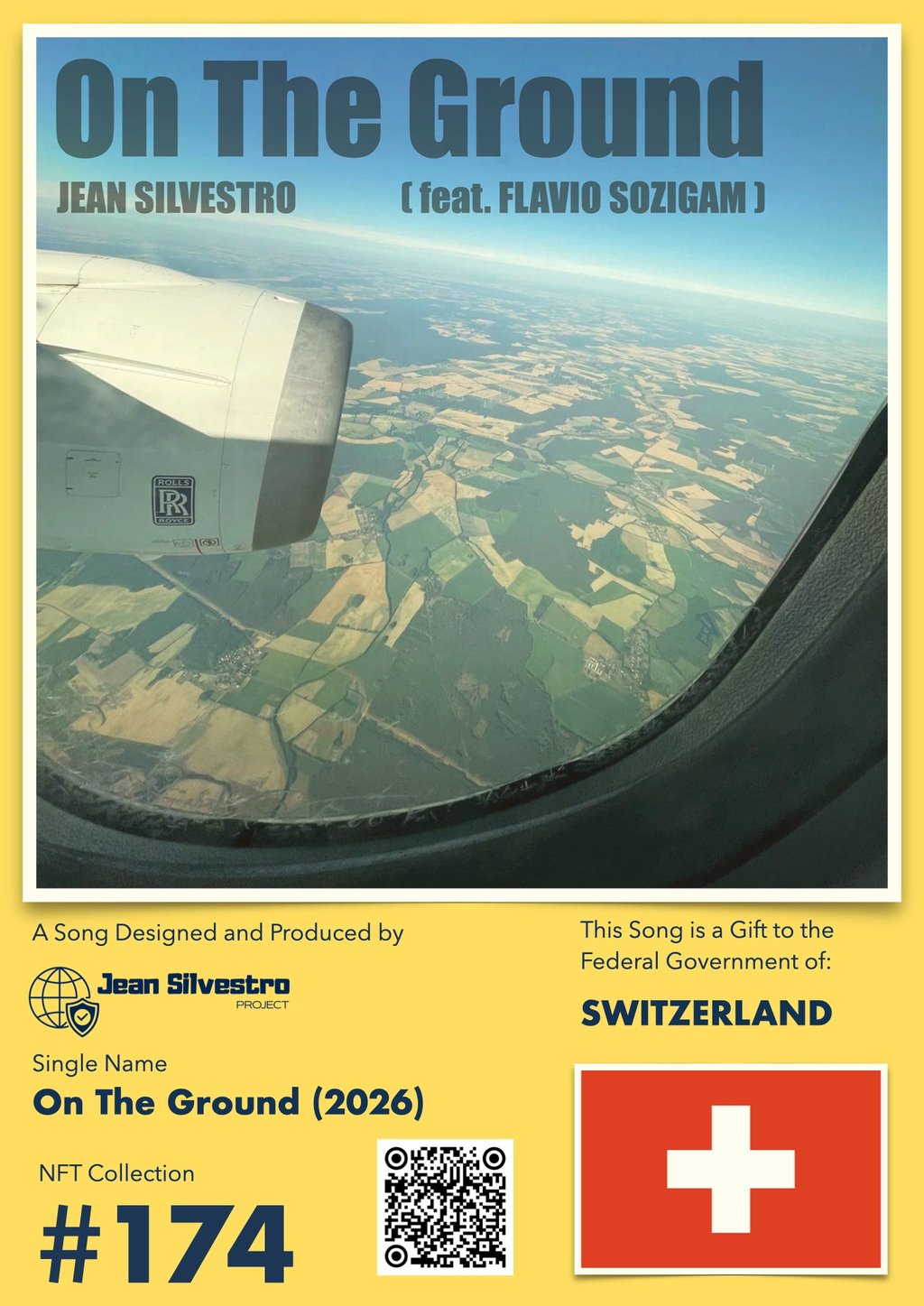
#174 On The Ground (2026)
Lyrics
Raining morning and dark clouds outside
And many people walking down another day
I’m looking for the way
While the rain is falling
My mind is running away of my head
Trying to make better plans
And try to save myself
Ashes falling on the ground, your calling
Many faces from another places
Here I am to save your soul
And you have to control your emotions
Across the oceans
Here I am to save your soul
And you have to control your emotions
Away and leave…
The seeds on the ground
Ashes on the ground
Black pigs turn around
You must walk away
Don't want see your face
On the ground
On the ground
On the ground
Here I am to save your soul
And you have to control your emotions
Across the oceans
Here I am to save your soul
And you have to control your emotions
Away and leave…
The seeds on the ground
Ashes on the ground
Black pigs turn around
You must walk away
Don't want see your face
Sunday morning
And I fell the cold wind in my face
Behind the scenes again
Another moment
And I don't believe we have another chance
Forgive my sins
Ashes on the ground
Black pigs turn around
You must walk away
Don't want see your face
Here I am to save your soul
And you have to control your emotions
Across the oceans
Here I am to save your soul
And you have to control your emotions
Away and leave…
The seeds on the ground
The Secret and Inspiration
That rainy morning, Flávio realized the sky seemed heavier than the clouds would allow. It wasn't just the gray that covered the city, but a kind of moral weariness that seeped down the sidewalks along with the water. People walked hurriedly, sheltering from the rain as if that were enough to protect them from the world. He, however, walked slowly. He was searching for something that wasn't in the buildings, nor in the luminous billboards, nor in the economic reports celebrating historical records while, somewhere not too far away, children slept on empty stomachs.
Flávio didn't discover the injustice of the world by chance; it had been accumulating inside him like ashes. Ashes of ignored news, of averted glances, of rehearsed speeches about growth and progress. While billionaires erected luxurious bunkers to protect themselves from a future they themselves were helping to deteriorate, mothers improvised dinners with almost nothing. He began calling these men black pigs—not to dehumanize them, but to see in them the symbolic image of an insatiable appetite devouring the planet's balance. And each time he saw a new skyscraper rise, he felt as if another handful of ashes fell upon the floor of his own consciousness.
Revolt was his first reaction. A hot, disordered, almost ungovernable revolt. He wanted to scream, expose, destroy structures. But the more he fueled this flame, the more consumed he felt from within. The world seemed sick, and he was getting sick too. On sleepless nights, he imagined himself crossing invisible oceans, fleeing that scenario, leaving everything behind. Perhaps the problem was the world; perhaps the problem was him.
It was in one of these dreams—or perhaps it wasn't a dream at all—that Flávio encountered another Flávio. It wasn't a mystical apparition with wings or golden light; it was himself, but more serene, with a gaze that carried no ashes. This other Flávio didn't offer ready-made answers, but asked a simple question: “Do you want to flee or do you want to cross over?” The difference seemed subtle, but it wasn't. Fleeing meant abandoning the battlefield; crossing over meant confronting his own fear of not being able to change it.
“Across the oceans,” said the serene version, pointing to a horizon that didn't exist there. Flávio understood that the oceans weren't geographical, but emotional. They were his frustrations, his accumulated hatred, his feeling of powerlessness. As long as he only blamed the black pigs, he would remain trapped by them. He needed to cross his own shadow before offering any light to the world. Controlling his emotions didn't mean suppressing them, but organizing them so that they became a constructive force.
When he awoke, the rain was still falling. Nothing had changed externally. The children were still starving; the bunkers continued to be built; the markets celebrated profits. But something inside him was different. The revolt was no longer an uncontrolled fire—it was concentrated energy. He understood that the world didn't need more destruction, but rather bridges. Bridges between excess and scarcity, between concentrated abundance and denied dignity.
Thus, the idea of Bridge Makers was born. Not as a typical NGO, but as a conceptual and practical movement. The proposal was simple and radical at the same time: to create real mechanisms of connection between those who accumulate and those who lack; to transform wealth into shared responsibility; to build a system where individual success is not measured only by what is retained, but by what is given back to the social fabric. Flávio knew that many would call him naive. Still, he preferred to be called a dreamer than a silent accomplice.
He began to see the "black pigs" not only as villains, but as symptoms of a culture that idolizes accumulation. And he began to ask himself and others an uncomfortable question: to what extent does each one participate in this imbalance? Perhaps there aren't only billionaires in bunkers; perhaps there are small versions of them in every selfish choice we make. This realization didn't diminish his criticism—it made it more honest.
Bridge Makers started small, almost invisible. Discreet meetings, pilot projects, unlikely alliances between entrepreneurs and forgotten communities. Some seeds fell on fertile ground; others were trampled by skepticism. Flávio knew he might not see the fruits. But he understood that leaving seeds in the ground was more important than waiting for the harvest itself. There was something profoundly liberating in acting without a guarantee of results.
On certain days, the doubt returned. He saw reports of growing hunger, deepening crises, new fortunes being announced. He wondered if he was just postponing the inevitable. In those moments, he remembered the other Flávio, the one who had taught him to cross over. The vaccine for the world wouldn't be a magic solution, but a collective process of awareness and balance. And every vaccine begins with a small dose of something that seems insufficient.
Flávio's story is not heroic in the classical sense. He didn't defeat the black pigs nor abolish hunger on the planet. The world remains imperfect, perhaps even sick. But he left seeds. And, in doing so, he invited others to take a stand. It's not about choosing between hating the rich or ignoring the poor. It's about deciding whether we will remain spectators of inequality or bridge builders.
Now, the question that echoes is no longer just his. Observing the ashes on the ground and the children who still wait for dignity, each reader needs to ask themselves: what is their role? Will you cross your own oceans to transform revolt into responsibility? Or will you continue walking in the rain, as if it were just another day? The planet doesn't just need critics or hoarders—it needs Bridge Makers. Perhaps the vaccine isn't in laboratories, but in the courage to build balance where before there was only indifference.
Switzerland - Performance
Each country profile presents the most recent data available on a range of indicators relating to the well-being of women and children. Each country profile page is composed of data from multiple sources, depending on the indicator domain. For example, child mortality rates come from the most recent data produced by the UNICEF-led Inter-agency Group for Child Mortality Estimation (IGME).
SDG indicators related to children
The 2030 Agenda includes 17 Global Goals addressing the social, economic and environmental dimensions of sustainable development. Attached to the Goals are 169 concrete targets measured by 232 specific indicators.
To map and monitor how ambitious and realistic countries’ targets are, UNICEF has created quantifiable country-level benchmarks for child-related indicators for which data are available to measure and monitor child rights on a common scale.
Below is a snapshot of the country’s performance against the 45 child-related SDG indicators, grouping results into five areas of child well-being to provide an overall assessment of how children are doing. Countries are assessed using global and national targets. The analysis provides valuable insights into both historical progress—recognizing the results delivered by countries in the recent past—and how much additional effort may be needed to achieve the child-related SDG targets. This approach provides a framework for assessing ambition as well as the scale of action needed to achieve it.
Jean Silvestro Project • 2025 • All Rights Reserved
The project is currently in the institutional consolidation phase, with legal and structural developments underway.